

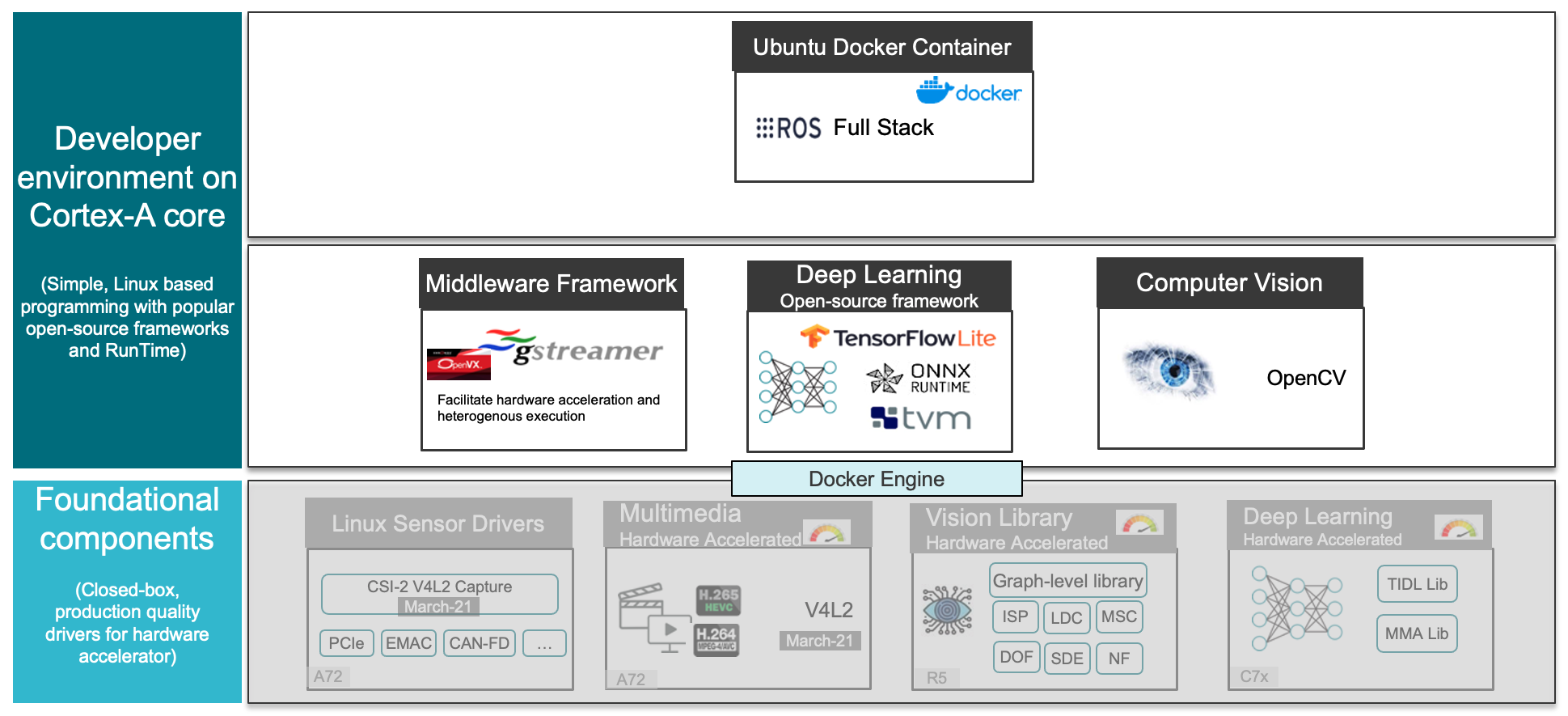
Development Tools
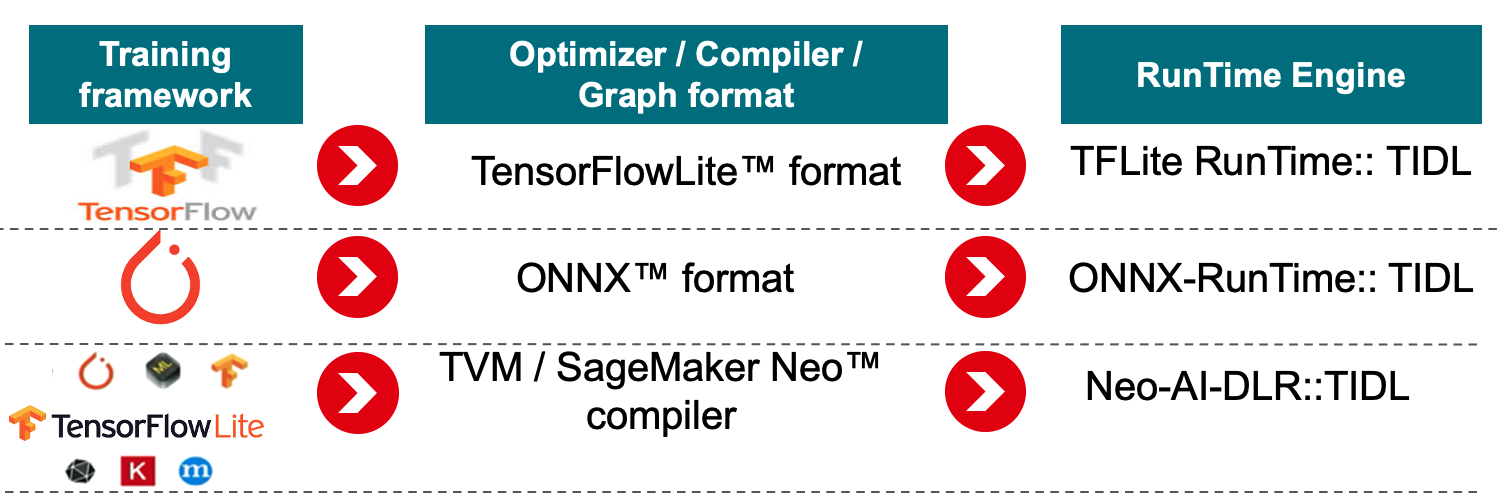
Used Libraries
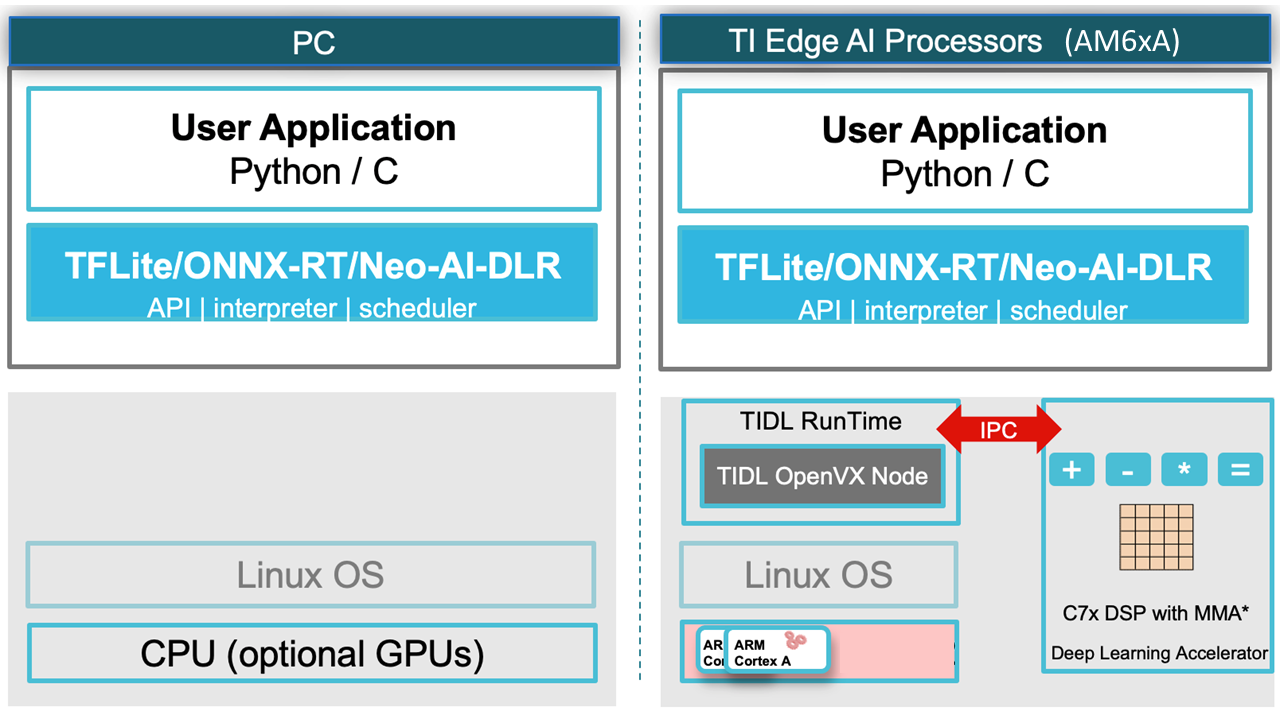
Development Environment Structure
Development Steps
1
Model Preparation
Deep learning communities on the internet offer many open-source and pre-trained models.
Developers can use these models by fine-tuning them (Transfer Learning) with their own datasets.
Gemstone offers a model pool called ModelZoo to facilitate this process. The models in ModelZoo are trained on industry-standard datasets like ImageNet1k and COCO and optimized for embedded systems. Additionally, developers can include their own models in the system.
2
Model Compilation
Models are compiled on the Host Computer (PC x86) before being run on the embedded hardware. In this process, “artifact” files are created using Python or C++ APIs to transfer specific layers of the model to the C7x/MMA processors. Different optimization and quantization options can be applied during compilation.
3
Model Deployment and Execution
The “artifact” files generated after compilation enable the model to run on the embedded hardware. In this step, the model is put into use for real-time inference operations.